







QuickBooks Blog
A business owner researching term loans and funding options for their business.
funding

Term loan meaning: A complete guide to understanding business financing

A term loan is a lump sum of money a business borrows from a lender and repays over a set period of time with interest. For many small businesses, term loans are a common way to finance larger, planned expenses, such as purchasing equipment, expanding operations, or managing cash flow during periods of growth.

Revolving credit typically lets you borrow, repay, and borrow again up to a limit, while a term loan typically provides a one-time disbursement repaid in scheduled installments. Business owners evaluating different forms of financing often review a term loan overview alongside other options available through the broader QuickBooks business loans hub to understand how each product fits specific needs.

Jump to:

What is a term loan?

A term loan is a structured borrowing agreement between a business and a lender with a set amount and repayment schedule. If approved, the business typically receives a lump-sum disbursement and repays it over a defined term -often in fixed, regular payments. Terms vary by lender and product, but repayment periods commonly range from about one to ten years, with some longer-term loans extending beyond that.

Several characteristics commonly distinguish term loans from other types of business financing. These elements affects how the loan works and and how it can fit into long-term planning:

  • Set loan amount: If approved, the borrower typically receives a specific amount, often as a lump sum, rather than drawing funds over time.
  • Scheduled repayment: Repayment follows an agreed schedule—often monthly—over a defined term.
  • Rate structure: The interest rate may be fixed or variable and is generally charged on the outstanding principal balance.
  • Security/collateral requirements: Depending on the lender and borrower profile, the loan may be secured by collateral or offered unsecured.
  • Intended use of funds: Some term loans are designed for specific purposes (such as equipment, expansion, or other investments), while others may allow broader business use.

For example, a manufacturing business might use a term loan to purchase production equipment, and spread the cost by repaying it over several years, instead of paying the full cost upfront. In accounting terms, those assets are considered business capital because they support long-term value creation.

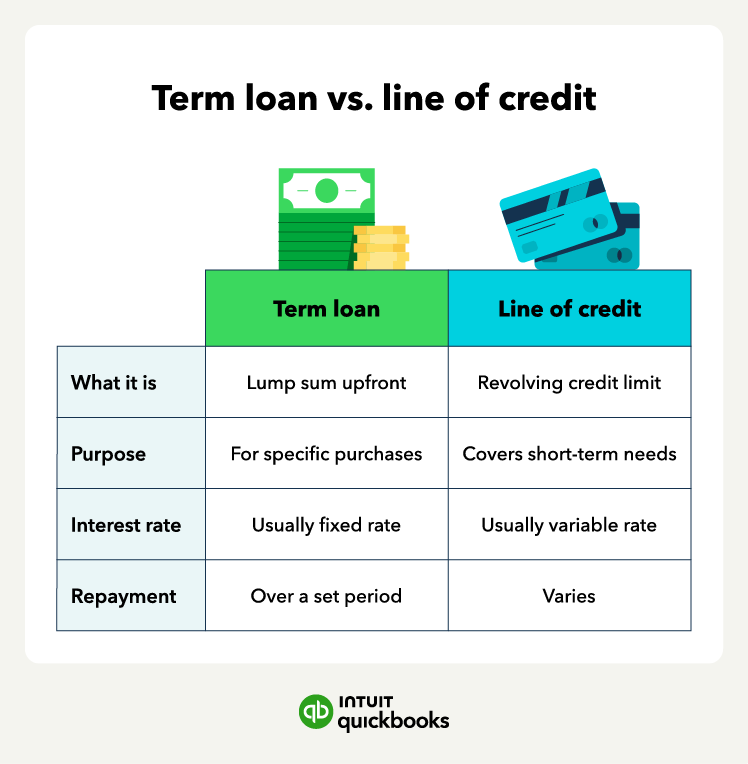
An illustration of term loan vs. line of credit and the differences, such as the purpose and interest rate of each.

How term loans work

Understanding how term loans function in practice helps business owners compare options and prepare for repayment. While exact requirements vary by lender, the process generally follows a similar path.

The application process

When reviewing a term loan application, lenders evaluate a business’s overall financial health and ability to repay. That assessment typically includes several factors:

  • Credit profile of the business and personal guarantor 
  • Annual revenue and cash flow trends
  • Length of time the business has been operating
  • Existing debt obligations
  • Intended use of loan funds

Credit plays a major role in approval decisions. Understanding what qualifies as a good business credit score can help set realistic expectations before applying. For businesses still strengthening their profile, learning how to build business credit may improve approval odds over time.

Loan disbursement

If approved, the lender typically disburses the loan proceeds in a single lump sum to the business’s bank account. Interest generally begins accruing once the funds are disbursed, often on the outstanding principal balance, which is why term loans are commonly used for planned expenses with a defined cost.

Businesses often use loan proceeds for equipment purchases, renovations, or expansion projects where timing and pricing are known in advance.

Most term loans use  an amortizing repayment schedule, meaning each payment includes both principal and interest.  In the early part of the term, a larger share of each payment typically goes toward interest; over time, more of each payment goes toward reducing the principal balance.

Because loan payments reduce available monthly cash, understanding how cash flow works is essential when determining whether repayment fits comfortably within the business’s budget.

Types of term loans  

Term loans are often grouped by repayment term (or maturity), with shorter- and longer-term options designed to support different business needs and use cases.

Short-term loans

Duration: Typically 3 to 18 months

Short-term loans are often used for immediate or time-sensitive expenses. Because they’re repaid over a shorter period, they may carry higher annualized costs than longer-term options, depending on the lender, product, and borrower profile..

Common scenarios where short-term loans may be considered include:

  • Purchasing seasonal inventory
  • Covering short-term cash flow gaps
  • Addressing emergency repairs
  • Funding quick turnaround projects

In situations where timing is critical, some businesses also explore alternatives such as bridge loans to temporarily cover financing needs.

Medium-term loans

Duration: Usually 1 to 5 years

Medium-term loans sit between short- and long-term options. The longer term can lower monthly payments versus short-term loans, making the monthly payments more manageable, the total borrowing costs typically remain lower than those of long-term financing, but this can vary based on the rate, fees, and repayment term.

Businesses commonly use medium-term loans for:

  • Equipment purchases
  • Marketing initiatives tied to long-term growth
  • Hiring and training employees
  • Technology upgrades or minor renovations

Long-term loans

Duration: 5 to 25 years

Long-term loans are often used for larger investments that provide benefits over many years. . Long-term loans are often used for larger investments expected to benefit the business over several years. Eligibility and requirements vary, but they may involve more rigorous underwriting and can require collateral, especially for higher loan amounts.

Typical uses include:

  • Commercial real estate purchases
  • Large-scale facility expansions
  • Major equipment investments
  • Business acquisitions
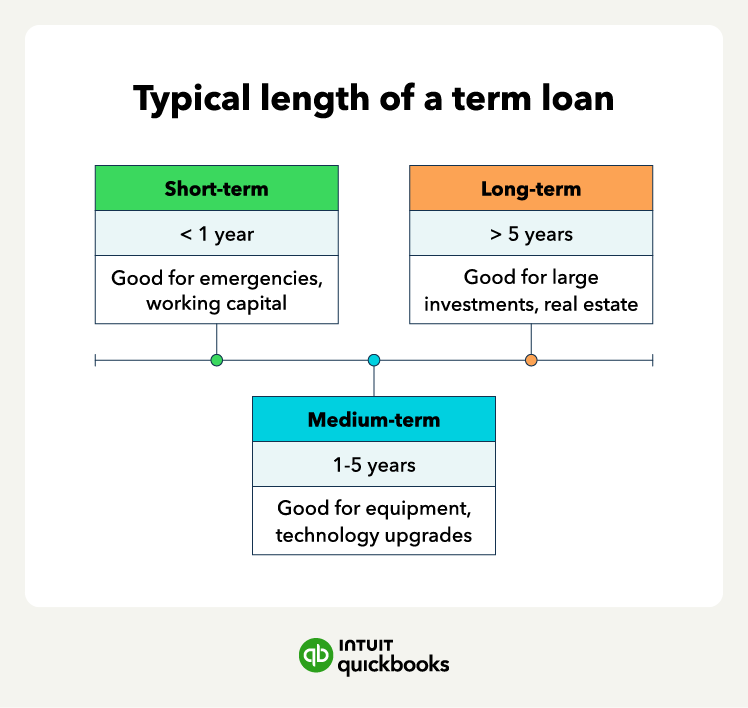
An illustration of the typical length of a term loan, including short, medium, and long term.

Term loan vs. other financing options

Understanding how term loans compare to other financing tools helps business owners choose the right solution for their situation. The table below highlights key differences.

Businesses comparing structured loans to more flexible options may also review differences between term loans and lines of credit before making a decision.

Advantages of term loans

For many businesses, term loans offer predictable financing that supports long-term planning.

Predictable payments

Fixed repayment schedules make it easier to forecast expenses and manage monthly budgets. Predictability is especially helpful when aligning loan payments with recurring revenue.

Lower interest rates

Compared to business credit cards or merchant cash advances, term loans often offer lower interest rates, particularly for borrowers with strong credit profile and financial history.

Build business credit

Consistently making on-time payments can help strengthen business credit over time. Business owners often ask whether a business loan affects personal credit, and the answer depends on factors such as guarantees and reporting practices.

Retain ownership

Unlike equity financing, term loans allow business owners to retain full control of their company while accessing needed capital.

Tax benefits

In many cases, interest paid on a business loan may be deductible. The IRS sets specific rules around eligibility, and guidance on tax-deductible business expenses can help clarify how deductions may apply.

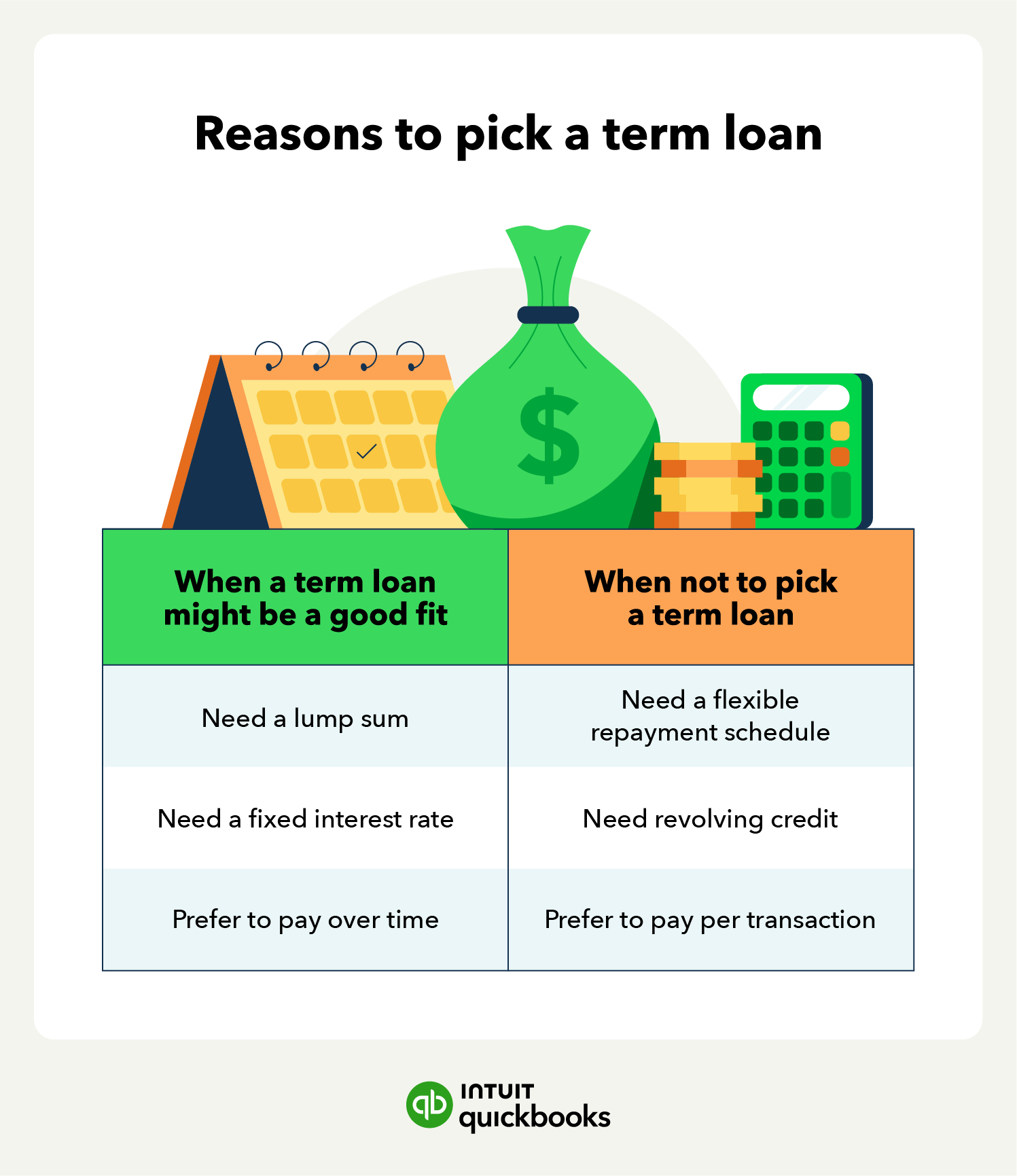
An illustration of the reasons to pick a term loan, such as set payments and fixed interest rate.

Disadvantages and considerations

Despite their benefits, term loans are not the right fit for every business.

Rigid payment schedule

Payments are due regardless of revenue fluctuations, which can strain cash flow during slower periods.

Qualification requirements

Traditional lenders often require strong credit, consistent revenue, and sufficient time in business, making approval more challenging for newer companies.

Prepayment penalties

Some lenders charge early repayment fees or penalties. Reviewing loan agreements carefully helps avoid unexpected costs.

Small business loans — big opportunities for growth

Get the funding you need fast with QuickBooks Term Loans or Lines of Credit.

How to qualify for a term loan

Lenders evaluate various factors when reviewing applications, such as the credit profile of the business and personal guarantor. Strengthening these areas can improve approval odds.

Credit score requirements

Most lenders look for a reliable credit profile, including a history of on-time payments and limited recent delinquencies.

Revenue and profitability

Lenders want evidence that a business generates enough income to cover loan payments. Financial documents commonly reviewed include bank statements, tax returns, and a profit and loss statement.

Time in business

Many lenders prefer businesses with at least two years of operating history and consistent revenue patterns.

Documentation needed

Applicants are often asked to provide financial records, legal documents, and projections such as a cash flow forecast to demonstrate repayment ability.

Interest rates and fees

Evaluating the full cost of a loan requires looking beyond the stated interest rate.

Annual percentage rate (APR)

APR is an annualized measure of borrowing cost that may include interest and certain fees. Rates vary based on creditworthiness, loan size, term length, and lender type.

According to the QuickBooks Small Business Financing Report 2025, many U.S. small businesses continue to weigh borrowing costs carefully as they plan investments in growth and productivity.

Where to get a term loan

Businesses can access term loans from several sources, each with different trade-offs.

Traditional banks

Some banks offer competitive rates and longer terms, but they may require extensive documentation and longer decision timelines.

Credit unions

Credit unions may provide personalized service and favorable terms, though membership requirements may apply.

Online lenders

Online lenders focus on streamlined applications and faster funding, sometimes serving businesses that do not qualify through traditional financial institutions.

Small Business Administration (SBA) loans

SBA-backed loans combine lender financing with government guarantees. Programs such as SBA 7(a) loans are outlined in resources like SBA 7(a) loans explained, which detail eligibility and application considerations.

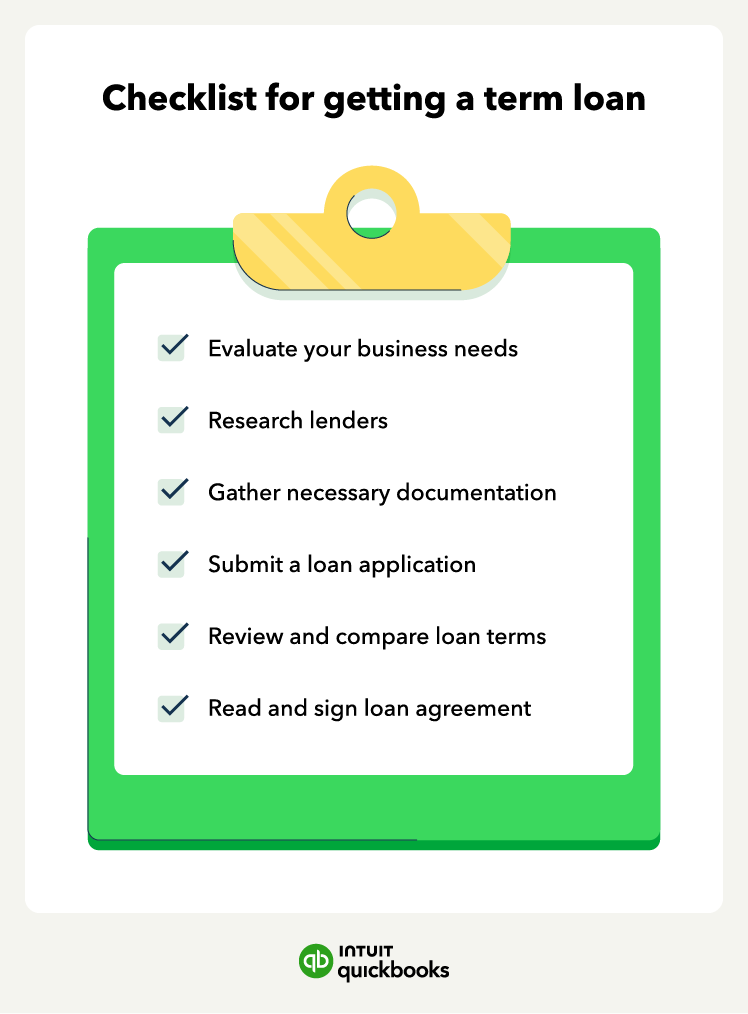
An illustration of a checklist for getting a term loan, such as researching lenders and gathering necessary information.

Using term loans effectively

Strategic use of a term loan can support sustainable growth rather than short-term relief.

Good uses for term loans

Term loans are often a good fit for planned, one-time expenses with a defined cost—such as equipment purchases, real estate, renovations or expansion projects

Term loan repayment strategies

Thoughtful repayment planning helps reduce costs and protect cash flow.

Create a repayment buffer

Building loan payments into a realistic budget helps ensure affordability, especially during slower revenue periods. Tools that explain how to create a business budget can support this planning.

Monitor your loan balance

Regularly reviewing the amortization schedule improves awareness of how payments are applied.

Refinance when appropriate

Improved credit or changing market conditions may create opportunities to refinance at a lower rate.

Term loans and your business plan

Incorporating financing into your overall strategic planning can help you use borrowed funds intentionally to effectively manage cash flow and grow your business.  

Calculate return on investment

Evaluating expected returns before borrowing is critical. Understanding how to calculate ROI helps determine whether a loan-funded investment is likely to deliver value beyond its cost.

Align loan terms with asset life

Matching repayment terms to the useful life of the asset reduces the risk of paying for outdated investments.

Maintain cash reserves

Maintaining emergency reserves helps protect against unexpected expenses and revenue fluctuations.

Making your term loan decision

Term loans can be a valuable financing tool when used thoughtfully. They provide access to capital for significant investments while allowing business owners to retain ownership and plan repayment over time.

Before applying, business owners can benefit from clearly defining the intended use of loan funds,calculating affordability across different scenarios, comparing lenders, and reviewing all loan offers and terms carefully. Resources such as how to write a business plan can help align financing decisions with long-term goals.

With careful planning and disciplined repayment, a term loan can support business stability and growth while fitting into a broader financial strategy.

QuickBooks Term Loan ("Term Loan") and QuickBooks Line of Credit ("Line of Credit") loans are issued by WebBank.


Recommended for you

Mail icon
Get the latest to your inbox
No Thanks

Looking for something else?

QuickBooks

From big jobs to small tasks, we've got your business covered.

Firm of the Future

Topical articles and news from top pros and Intuit product experts.

QuickBooks Support

Get help with QuickBooks. Find articles, video tutorials, and more.